Then the business reality pushes back.
A campaign that looked efficient produces weak-fit users. A channel that lowered acquisition cost starts hurting retention. A conversion rate improves, but lead quality declines. Attribution gives one platform credit for growth that multiple touchpoints helped create. The numbers are not always fake. They are just incomplete.
That is the real problem with digital marketing analysis in telehealth. Most brands do not suffer from too little data. They suffer from too much unprioritized data and too little decision quality. In a category shaped by trust, privacy-sensitive journeys, onboarding friction, retention behavior, and acquisition economics, analysis has to do more than describe performance. It has to help operators read the right signals.
Telehealth brands also have to be careful about how measurement is built. HHS has specific guidance on online tracking technologies used by HIPAA-regulated entities, and the FTC maintains health privacy guidance for businesses handling consumer health information. State privacy rules are also expanding, which makes disciplined, privacy-aware analysis more important than ever.
More marketing data does not mean better decisions. In telehealth, the wrong signal can make growth look stronger while the business gets weaker.
Key Takeaways
- Digital marketing analysis in telehealth should connect campaign performance to acquisition quality, retention, payback, and business economics.
- Platform metrics are useful, but they rarely tell the whole story.
- Lower CPA, higher CTR, or more conversions can still hide weak-fit demand.
- PHI and health-adjacent data require careful handling in tracking, attribution, segmentation, and reporting workflows.
- State privacy rules continue to evolve, so telehealth teams need governance-minded measurement systems.
- The goal is not more dashboards. The goal is better decisions.
What Digital Marketing Analysis Means in Telehealth
Digital marketing analysis is the process of interpreting marketing performance across channels, campaigns, funnels, and customer cohorts. In telehealth, that process has to go beyond basic reporting.
Reporting tells a team what happened. Analysis explains what matters. That difference is not cosmetic. A report may say paid social generated 3,000 leads at a lower cost. Analysis asks whether those leads converted, retained, and created enough value to justify the spend. A dashboard may show organic traffic growth. Analysis asks whether that traffic came from topics that support real patient acquisition or just informational visibility with little commercial relevance.
That is why digital marketing analysis is more than data visibility. Visibility is having numbers. Decision quality is knowing which numbers deserve action. Telehealth brands need the second one.
The category makes this harder because a conversion is rarely the full story. A user may click, submit a form, start an intake flow, or enter a lifecycle sequence before the business understands whether the acquisition has real value. That means early signals can mislead teams if they are not connected to downstream behavior.
Digital marketing analysis in telehealth should therefore connect three layers: channel performance, funnel quality, and business outcomes. When those layers are separated, teams optimize for whatever is easiest to measure. That is usually where the trouble starts.
Why Telehealth Brands Misread Marketing Signals
Telehealth brands misread marketing signals when they treat isolated metrics as final answers. The data may be technically accurate, but the interpretation can still be wrong.
Platform metrics are the easiest trap. Ad platforms are designed to show delivery, engagement, and conversion activity. Those signals matter, but they are not the same as business value. A platform can report strong performance while the acquired cohort underperforms later. The platform did not necessarily lie. It just answered a narrower question than the business needed answered.
Cheap acquisition is another common false signal. A lower CPA feels like progress because it gives the team a clean number to celebrate. But lower cost can come from weaker intent, broader messaging, easier conversions, or traffic that does not hold value. In telehealth, low acquisition costs can become expensive once onboarding, support, retention, and payback are factored in.
Attribution also creates confusion. A user may discover the brand through social, return through search, read educational content, and convert later through a branded query. If one platform receives most of the credit, the team may shift budget toward the wrong source. The result is not just bad reporting. It is bad capital allocation.
Privacy-sensitive measurement changes the analysis further. Telehealth teams should be careful not to assume that more tracking always yields better insight. HHS notes that tracking technologies collect and analyze user interactions with websites and apps, and its guidance addresses how HIPAA-regulated entities should evaluate such technologies. The safer strategic takeaway is simple: analysis should be useful, governed, and purpose-limited instead of built around collecting every possible signal.
The Metrics That Actually Matter in Digital Marketing Analysis
Good digital marketing analysis starts by ranking metrics by how much they help the business make better decisions. In telehealth, the strongest metrics usually connect marketing activity to downstream value.
- CAC in context: Customer acquisition cost matters, but not by itself. It should be read alongside lead quality, conversion quality, retention, and payback.
- Qualified acquisition: A lead, signup, or form fill should not automatically count as a high-value outcome. The better question is whether the user progresses through the funnel in a way that supports the business.
- Conversion quality: A higher conversion rate can be good, but only if the users converting are still aligned with the offer and journey.
- Retention and payback: Acquisition is only financially viable if the business can recover costs within a workable time frame and retain sufficient value over time.
- Contribution margin: Revenue alone can flatter weak growth. Analysis should account for whether acquired demand supports real margin after marketing and operating costs.
These metrics help teams avoid the classic dashboard trap: celebrating what is visible while ignoring what is valuable.
A telehealth brand may see strong lead growth and still have a weak acquisition model. It may see a higher CPA and still be making a better decision if those users are a better fit and more durable. It may show a decline in last-click attribution for that channel, even though that channel still plays an important role in creating demand earlier in the journey.
This is why digital marketing analysis should not be built around one hero metric. Telehealth growth is too layered for that. The goal is to understand how metrics interact, not to crown one dashboard number as king and let it start making budget decisions like a tiny spreadsheet monarch.
How to Separate Useful Signals From Noise
The easiest way to separate useful signals from noise is to compare early indicators against downstream outcomes. Early metrics are not useless. They are just incomplete. Click-through rate, cost per lead, conversion rate, and landing page engagement can all help teams understand what is happening at the surface level. They become more valuable when compared to what happens later.
For example, a paid social hook may drive high engagement and low lead cost. That sounds good until the analysis shows those leads have lower-quality progression. Another ad may cost more but produce users who move through the funnel with fewer expectation gaps. The second ad may be the better business asset even if the first one looks more efficient on the platform.
Segmentation matters too. Telehealth teams should analyze performance by channel, cohort, funnel stage, and intent level. Paid search traffic should not be judged the same way as discovery-driven paid social. Organic traffic from decision-stage topics should not be evaluated the same way as broad educational traffic. Lifecycle communication should not be measured like acquisition media.
Signal consistency is another useful test. If a metric improves in one place but worsens elsewhere, it warrants skepticism. A better conversion rate with weaker retention is not a clean win. A cheaper CPL with a higher support burden is not a clean win. A platform-reported improvement that does not show up in business outcomes should be investigated before the budget follows it into the fog.
Telehealth operators should also avoid overreacting to short-term swings. Some changes are real. Some is noise. Some come from seasonality, platform learning, creative fatigue, tracking changes, or shifts in channel mix. Strong analysis looks for patterns that persist long enough to justify action.
How PHI and State Privacy Considerations Shape Marketing Analysis
Digital marketing analysis in telehealth has to be privacy-aware by design. That does not mean teams should avoid measurement. It means they should understand that not every signal should be collected, activated, or pushed through every marketing tool.
PHI and health-adjacent behavioral data can create more sensitivity than ordinary consumer analytics. Depending on the organization, user journey, and data flow, certain tracking, attribution, or audience-building workflows may need stricter review. This article is not legal advice, but from an operator standpoint, the direction is clear: telehealth teams should build analysis systems that are intentional, governed, and conservative where sensitive data may be involved.
More tracking is not automatically better. Sometimes it creates more risk, more complexity, and less trust in the reporting. Stronger analysis often comes from asking better business questions before adding more instrumentation. What decision does this metric support? Who needs access to it? Does the analysis require user-level detail, or would aggregated reporting suffice? Is the data being used only for measurement, or is it drifting into audience activation?
Aggregated and governed reporting often leads to better decisions because it keeps teams focused on patterns rather than overfitting to individual-level behavior. The NIST Privacy Framework describes privacy risk management as a way to support innovation while protecting individuals’ privacy, which aligns with the practical direction telehealth teams should take in analytics design.
State privacy rules make this even more important. IAPP’s tracker shows the U.S. state privacy landscape continues to change, with comprehensive state privacy laws and enforcement timelines evolving across jurisdictions. For telehealth brands operating across states, that means marketing analysis cannot rely on a static privacy assumption.
Common Digital Marketing Analysis Mistakes in Telehealth
The same analysis mistakes tend to recur.
- Treating every conversion as equal: A form fill, a signup, a qualified user, and a durable patient relationship are not interchangeable.
- Confusing lower CPA with better acquisition: Lower cost can hide a weaker fit, poor retention, or slower payback.
- Letting platform dashboards define reality: Platform reporting is useful, but it should not replace business-level analysis.
- Ignoring retention when judging channels: A channel that converts cheaply but retains poorly may be worse than it looks.
- Adding more data before clarifying the business question: More metrics do not fix an unclear strategy. They usually just make the meeting longer.
The fix is not to abandon analytics. The fix is to make the analysis more disciplined.
Every major marketing question should connect to a business decision. Should the spending increase? Should the channel mix change? Should the creative be refreshed? Should the landing page be rewritten? Should lifecycle communication be strengthened? Should the team investigate a cohort quality issue?
If the analysis does not help answer one of those questions, it may be reporting decoration. Pretty, but not exactly paying rent.
Why Telehealth Growth Needs Better Analysis, Not Just More Data
Telehealth growth teams do not need another dashboard just to have one. They need shared definitions of success.
Marketing, finance, analytics, and operations should not be reading the same funnel through different dictionaries. If marketing defines success as lower CPA, finance defines success as payback, and operations defines success as manageable support load, the business will keep arguing about performance without solving the real issue.
Better digital marketing analysis connects those views. It shows how channel performance affects funnel quality. It shows how acquisition cost interacts with retention. It shows how creative strategy influences cohort behavior. It shows when a channel is creating incremental growth and when it is mostly receiving credit for demand created elsewhere.
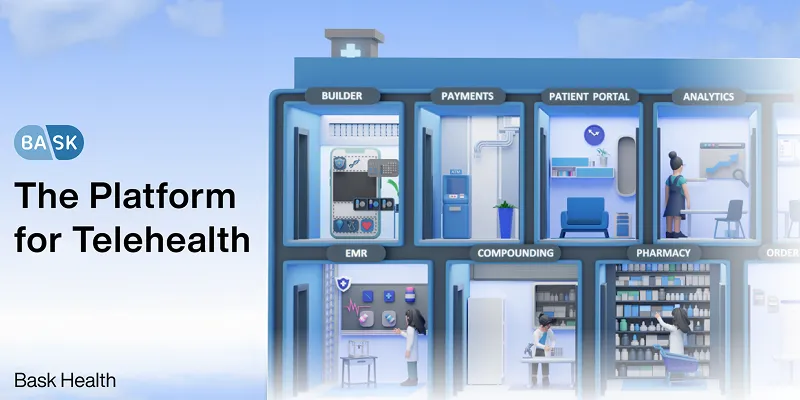
This is where Bask Health fits naturally into the conversation. Telehealth brands need more than campaign reporting. They need growth systems that connect acquisition, analytics, privacy posture, funnel performance, and business economics. The real value is not simply knowing what happened last week. It is knowing what deserves action next.
That distinction matters. A team can have accurate reports and still make weak decisions. A better analysis system helps teams decide which signals deserve budget, which ones require investigation, and which ones are just noise wearing a nice chart.
How to Improve Digital Marketing Analysis Right Now
The fastest way to improve digital marketing analysis is to start with the business question before opening the dashboard.
If the question is “Which channel deserves more budget?”, the analysis should compare channel performance across acquisition quality, retention, and payback. If the question is “Why did the conversion rate improve?”, the analysis should assess whether lead quality held steady. If the question is “Why did CAC rise?” then the team should separate media cost inflation from funnel weakness, creative fatigue, and channel mix changes.
Next, map metrics to funnel stages. Top-of-funnel metrics should explain attention and intent. Mid-funnel metrics should explain trust and progression. Bottom-of-funnel metrics should explain conversion quality. Post-conversion metrics should explain retention and economic durability. When metrics are not mapped this way, teams start using the wrong number to answer the wrong question.
Then review channel performance by cohort quality. Do not stop at what a channel produced today. Look at what that channel produces over time. Which cohorts retain better? Which channels create fewer expectation gaps? Which messages correlate with stronger downstream behavior? That is where the analysis starts becoming useful.
Finally, simplify before adding complexity. A lean, trusted reporting system is better than a sprawling analytics stack full of signals the team cannot interpret or govern well. In telehealth, clarity beats noise almost every time.
Conclusion
Digital marketing analysis for telehealth is not about collecting more data or building prettier dashboards. It is about reading the right signals.
The strongest telehealth brands understand that clicks, conversions, and platform-reported wins are only part of the picture. Real analysis connects marketing performance to trust, qualification, retention, privacy-aware measurement, and business economics. It helps teams avoid false positives. It keeps budget decisions grounded. It protects growth from becoming an expensive activity.
That is the real standard. Not more metrics. Better interpretation. Not more dashboards. Better decisions.
References
- U.S. Department of Health & Human Services, Office for Civil Rights. (2024, June 26). Use of online tracking technologies by HIPAA covered entities and business associates. U.S. Department of Health & Human Services. https://www.hhs.gov/hipaa/for-professionals/privacy/guidance/hipaa-online-tracking/index.html.
- Federal Trade Commission. (2024, August). Collecting, using, or sharing consumer health information? Look to HIPAA, the FTC Act, and the Health Breach Notification Rule. U.S. Federal Trade Commission. https://www.ftc.gov/business-guidance/resources/collecting-using-or-sharing-consumer-health-information-look-hipaa-ftc-act-health-breach.
- National Institute of Standards and Technology. (n.d.). Privacy Framework. U.S. Department of Commerce. https://www.nist.gov/privacy-framework.
- International Association of Privacy Professionals. (2019, April 18). US State Privacy Legislation Tracker. IAPP. https://iapp.org/resources/article/us-state-privacy-legislation-tracker